Slow by design: why stepping away from instant messaging helps, and why Hasty was built
Instant messaging trained everyone to answer right away. Hasty slows conversation down on purpose: letters that take the real distance between you to arrive. What slower interaction gives people, and how to design for it.
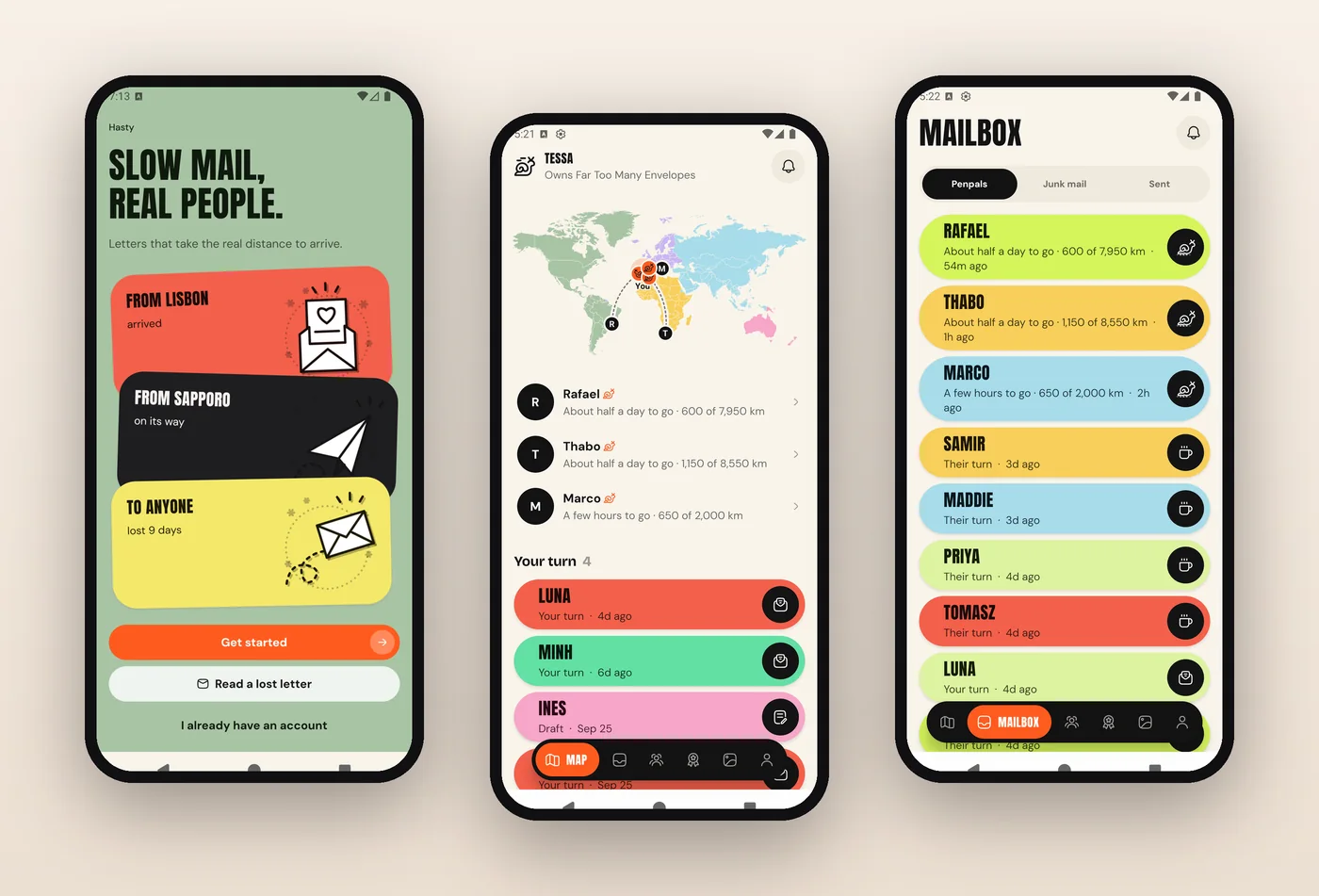
Instant messaging trained everyone to answer right away. Typing dots, read receipts and notifications turn every conversation into something to keep up with, and many people now feel connected all day and close to nobody. Hasty was built to go the other way: a penpal app where you write letters instead of chatting, and each letter takes the real distance between you to arrive.
Why slower is better for people
When nobody expects an answer in seconds, people get time to think before they write. Messages get longer and more personal, because the next one won’t arrive in a minute. And waiting gives people something to look forward to, which a feed that never ends can’t.
Let distance set the pace
Fast: every message lands instantly, so the conversation runs at the speed of the most impatient person.
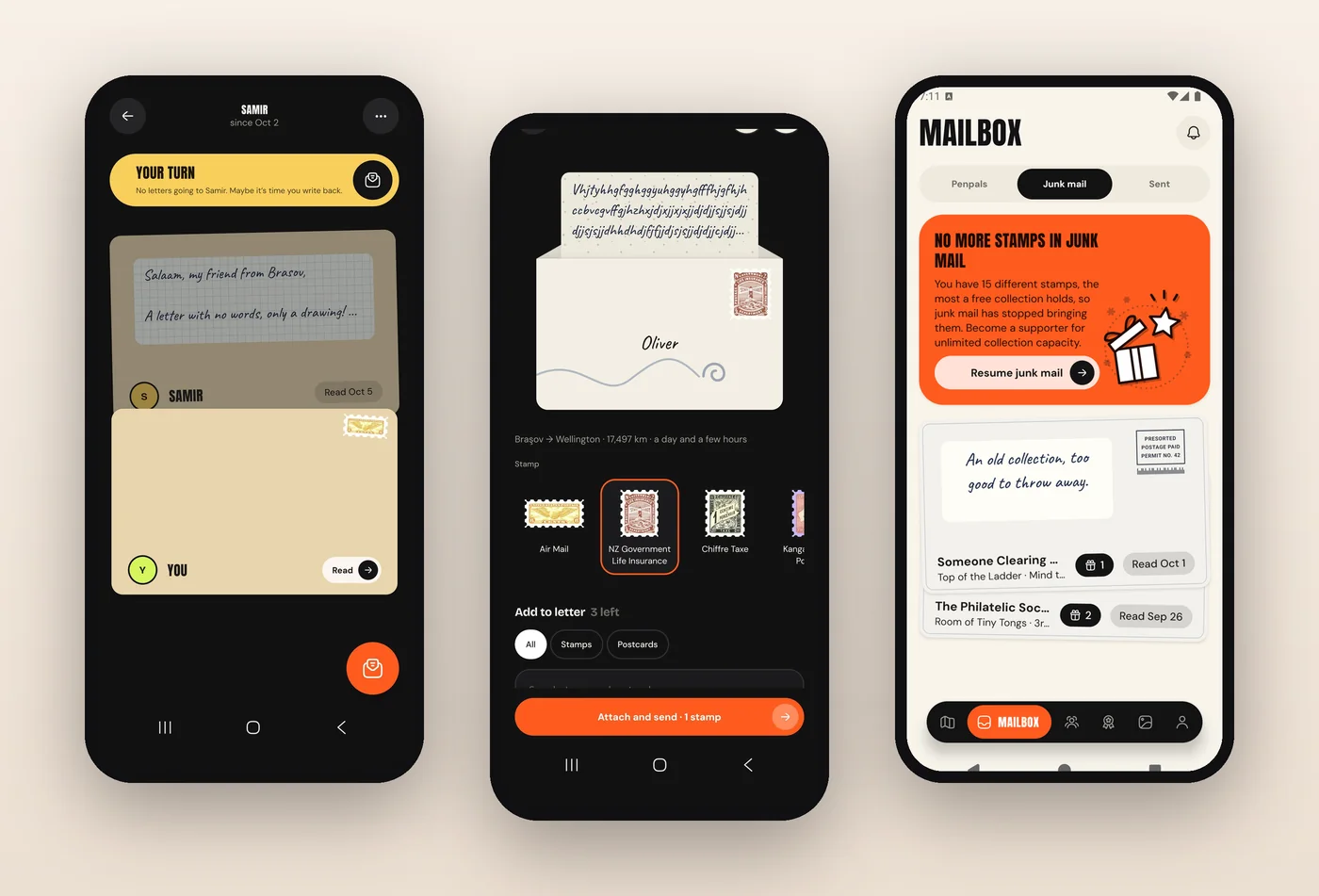
Slow: in Hasty, a letter travels from a few hours across town to about two days across the world, based on the real distance between the two cities. The sealing step shows the route and the time it will take, so the wait feels like part of the post, not a delay.
Show an estimate, never a countdown
Fast: a live timer, so people keep checking.
Slow: Hasty only ever says roughly when a letter will arrive, in words like “about half a day” or “about two days”, and the real time varies a little each way. There is nothing to watch, so people close the app and come back when the post has come.
Make the waiting worth something
Fast: nothing happens between messages except the urge to check.
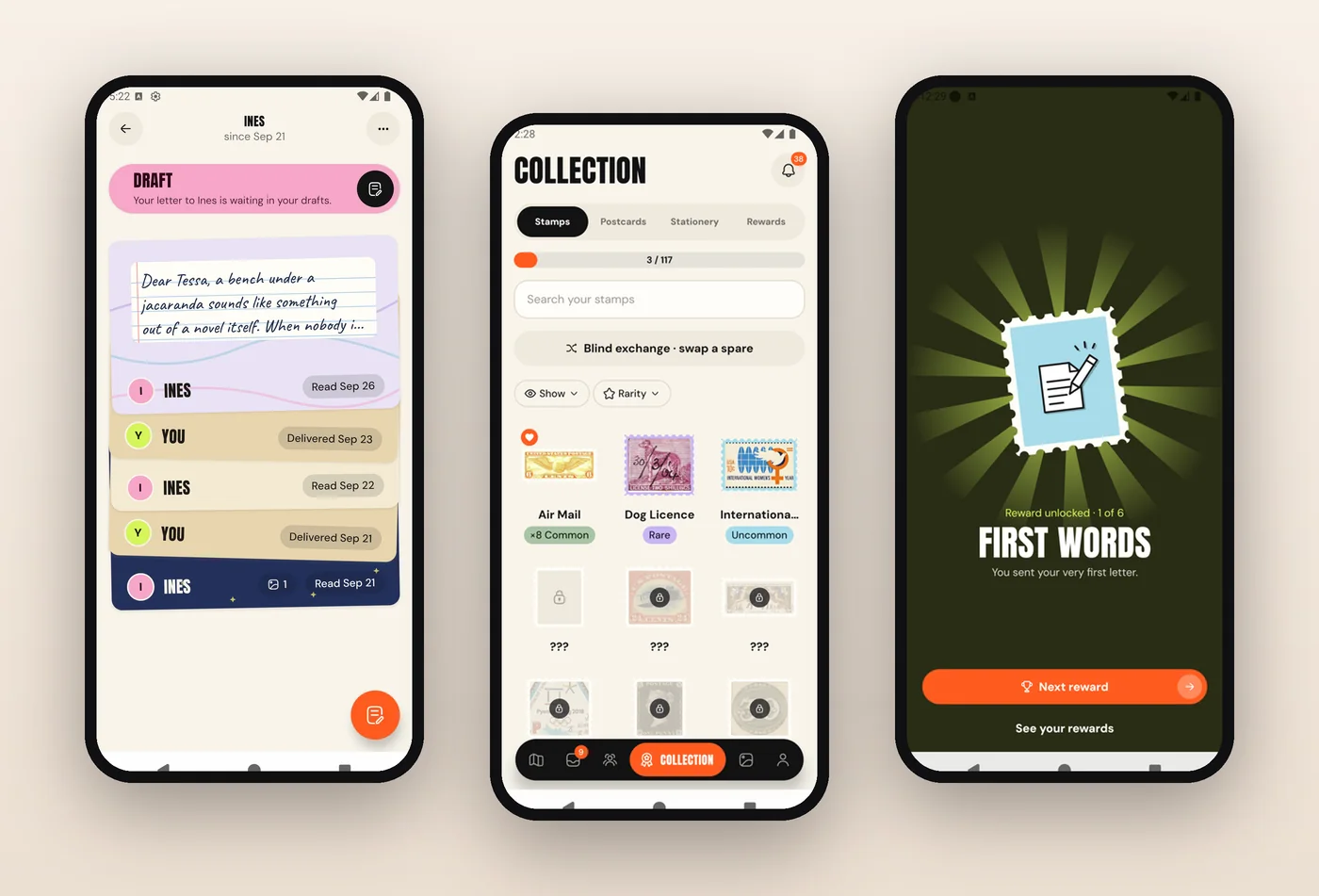
Slow: the post brings more than letters. Stamps, postcards from 137 cities and stationery arrive in the mailbox to collect, and “Someone, Somewhere” lost letters go to a random stranger and stay anonymous until answered. Opening the mailbox feels like checking a real one.
Replace the feed with a person
Fast: an audience, likes and an algorithm deciding what you see.
Slow: Hasty matches people from a short self-description, languages and interests, favouring shared interests and new countries. There is no feed to scroll and nothing to perform for, just one person writing back.
Keep slow conversations safe
Slower doesn’t mean unguarded. Every letter goes through safety checks, reporting blocks the sender automatically, and a moderation site sits behind the app. Photos only show once the recipient approves them.
What product teams can take from it
Not every product should be faster. When the value is reflection, care or connection, friction can be the feature: a delay that gives people time, an estimate instead of a timer, a reason to close the app. Pacing is hard to judge in a spec and easy to feel in an interactive prototype, so test it early, in the MVP design, with real people waiting for real replies.
Hasty is in private testing at heyhasty.com. More on how I approach this in app design, interactive prototypes, MVP design and UI/UX design.
Questions about this work? Let’s talk it through.
Set a meeting