UX for AI: designing chatbots and agents people actually use
How to design AI interfaces people trust: recognisable AI output, findings that lead to actions, confidence in plain language, and agents that ask before they act.
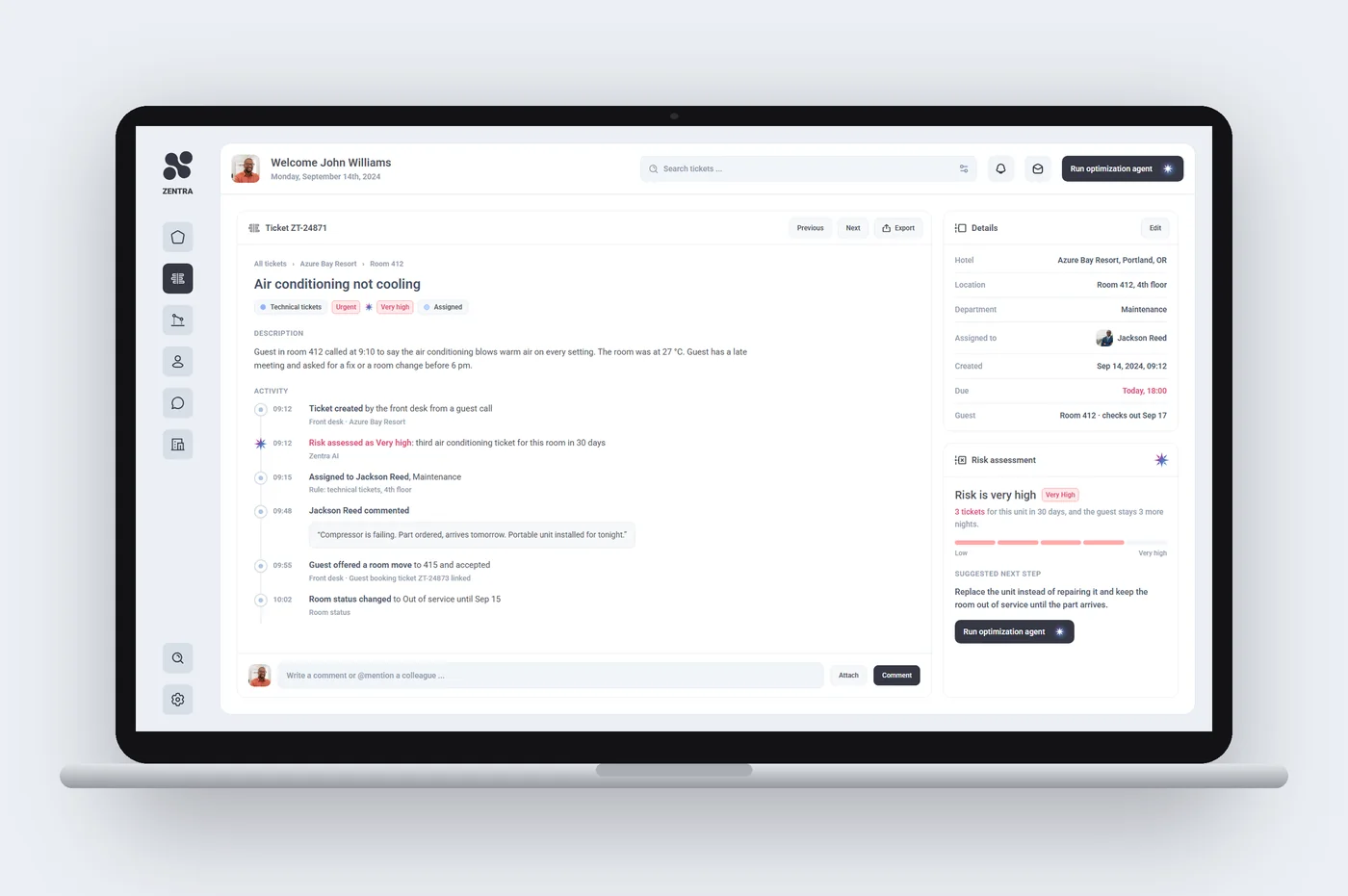
Most AI features that go unused fail at the interface, not the model. These are the patterns I rely on, from Zentra, Vytrac and Missed Call Assistant.
Make AI output recognisable
In Zentra, AI cards carry a star marker, and strong colour is kept for status badges and that marker, so AI results never blend into one more chart.
Lead with a finding, then an action
Each Zentra AI card gives a plain-sentence finding and a suggested fix. One sentence on what the model found, one clear next step, and a way to dismiss it.
Show confidence in words
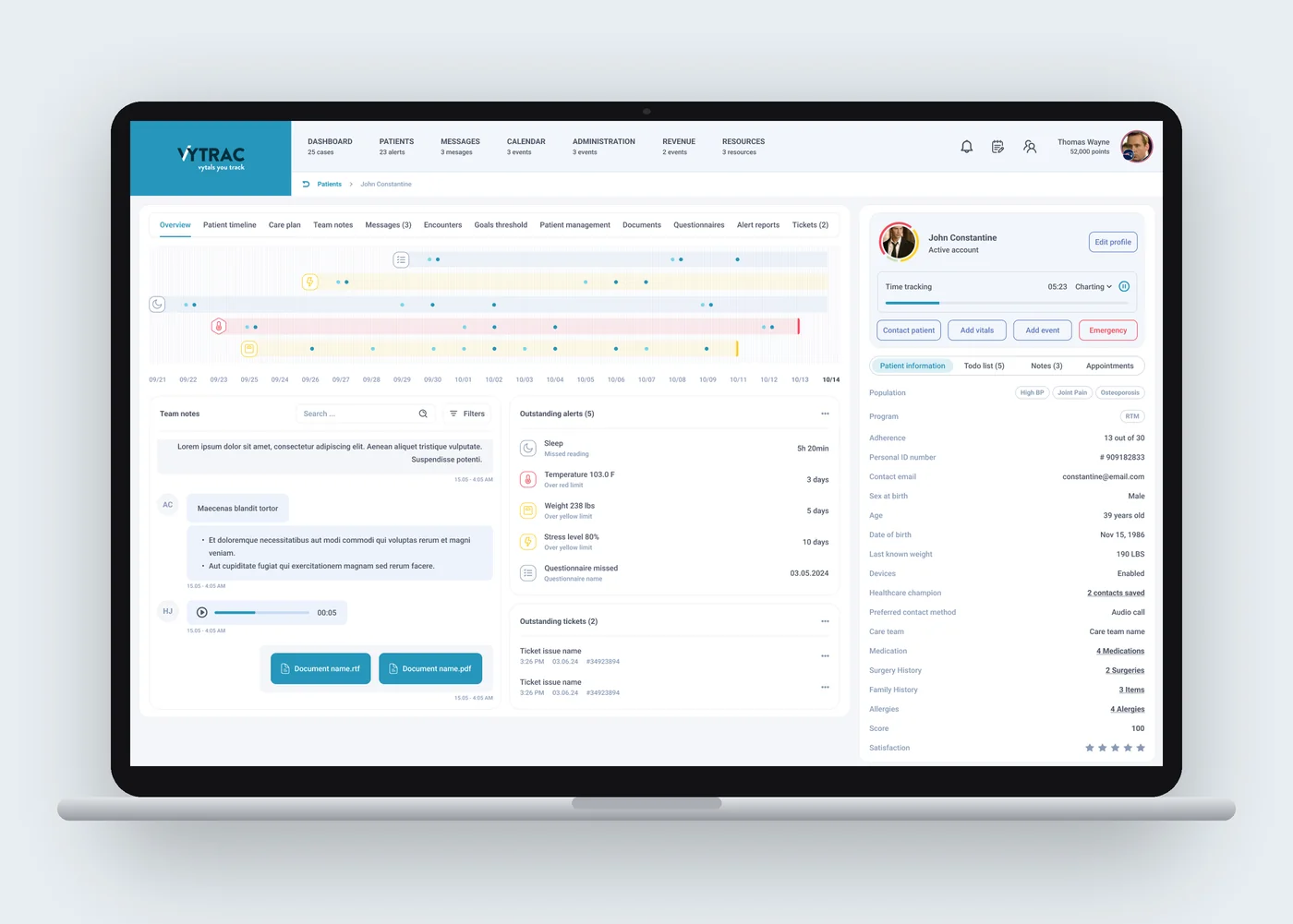
A score of 0.87 means little to a clinician. On Vytrac, the question was how AI insights, symptom trends and model confidence reach clinicians in a form they can act on:
- Levels, not decimals: high, medium or low, with a short reason.
- What it’s based on: the readings or period behind the result.
- Lower confidence, lighter weight: a suggestion to check, never a verdict.
Put the evidence next to the claim
Vytrac’s timeline gives every vital its own lane and marks where readings crossed a limit, so the reason behind an alert is on the same screen.
Chatbots: design the hand-off first
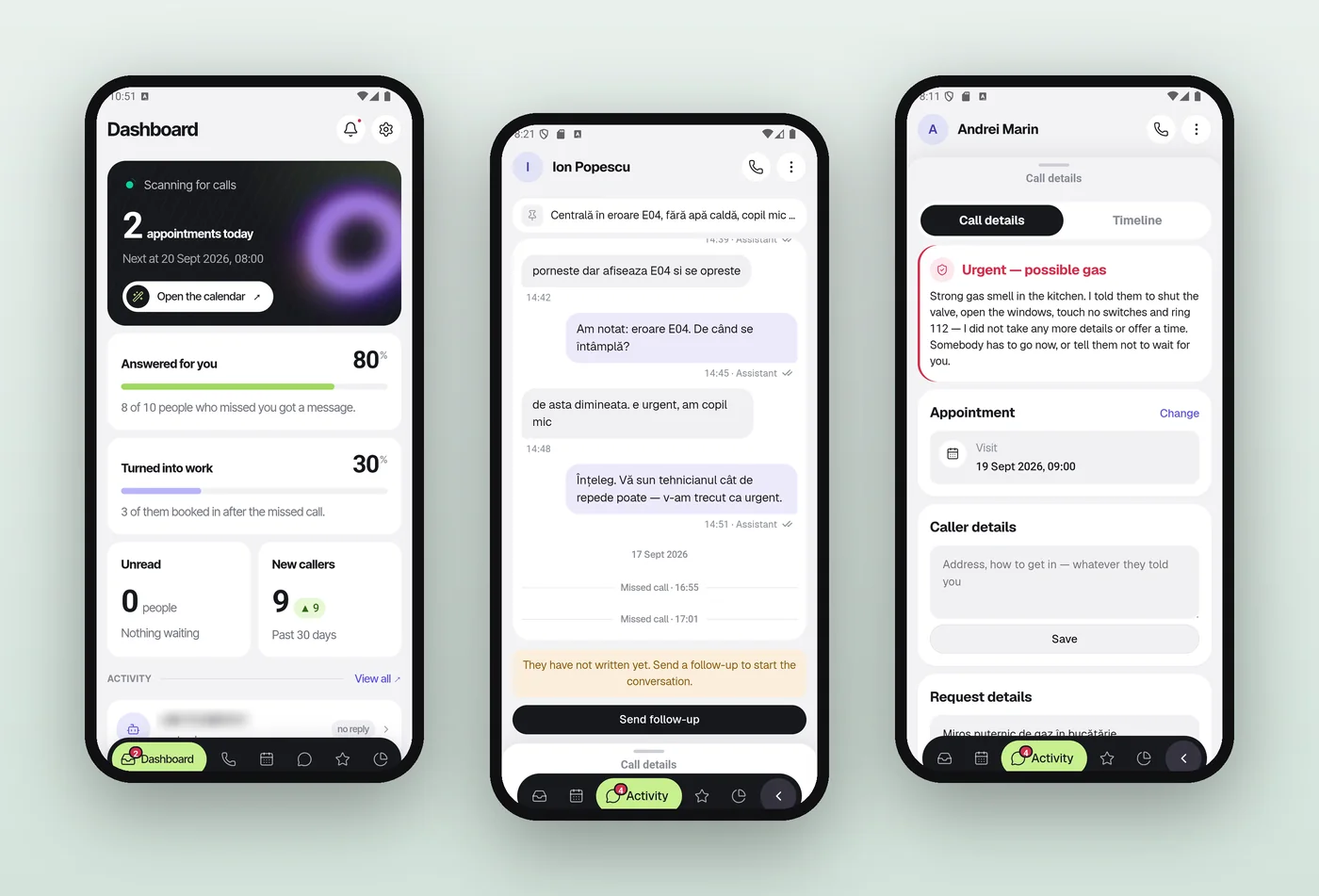
In Missed Call Assistant, the AI works out what the caller needs and offers slots, but escalates urgent cases such as a gas smell. Decide what the bot never answers and when a person takes over before designing the happy path.
Agents: ask before acting
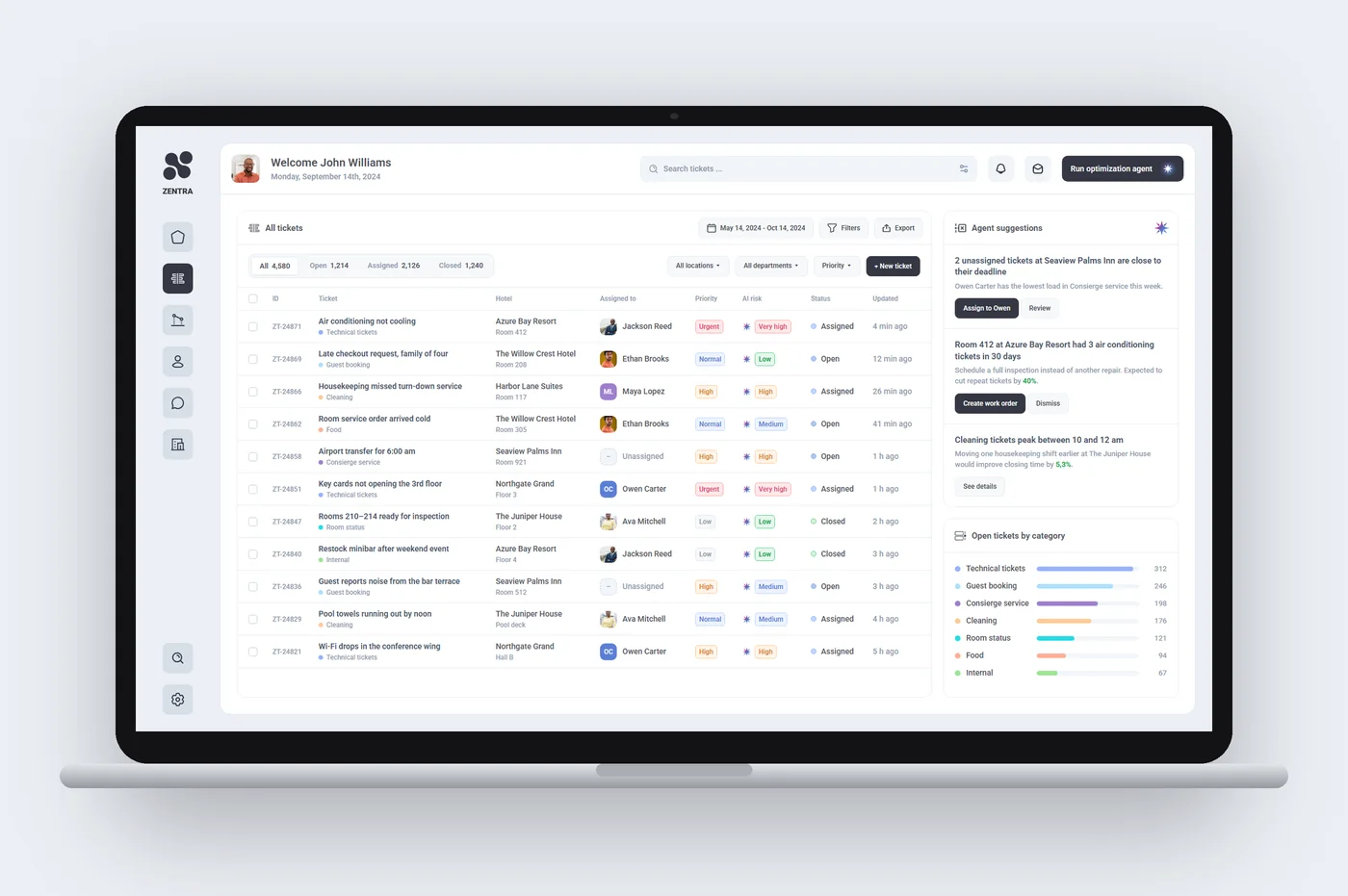
Zentra’s optimisation agent runs when a manager starts it, and its suggestions appear in the ticket list next to the tickets they concern. For any agent, decide what it may do alone, what needs approval, and how it reports what it changed and how to undo it.
Prototype AI features with realistic outputs, including wrong answers and empty states; that’s where trust is won or lost. See AI product design.

An AI-powered ticket dashboard for hotels with many locations.
Interactive prototype
Doctors see at a glance whether a patient is getting better.
Interactive prototype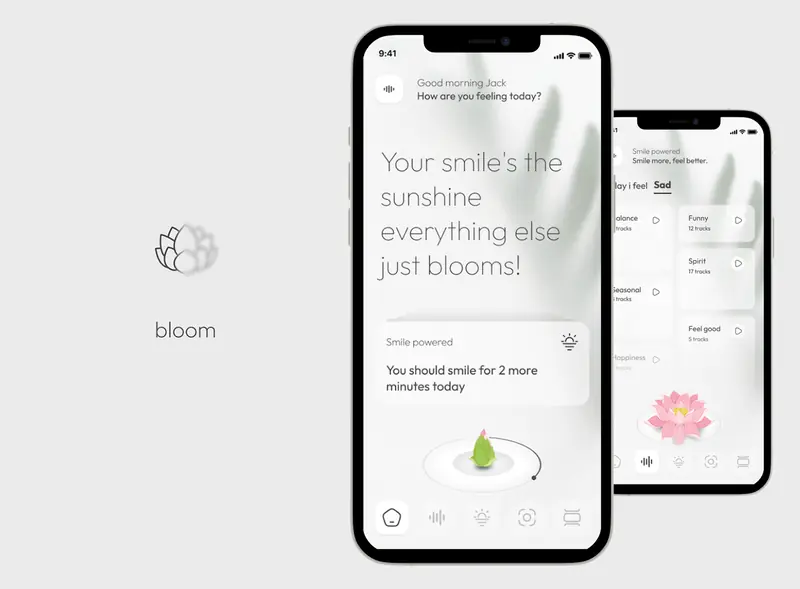
A happiness app where every smile makes your flower bloom.
Questions about this work? Let’s talk it through.
Set a meeting